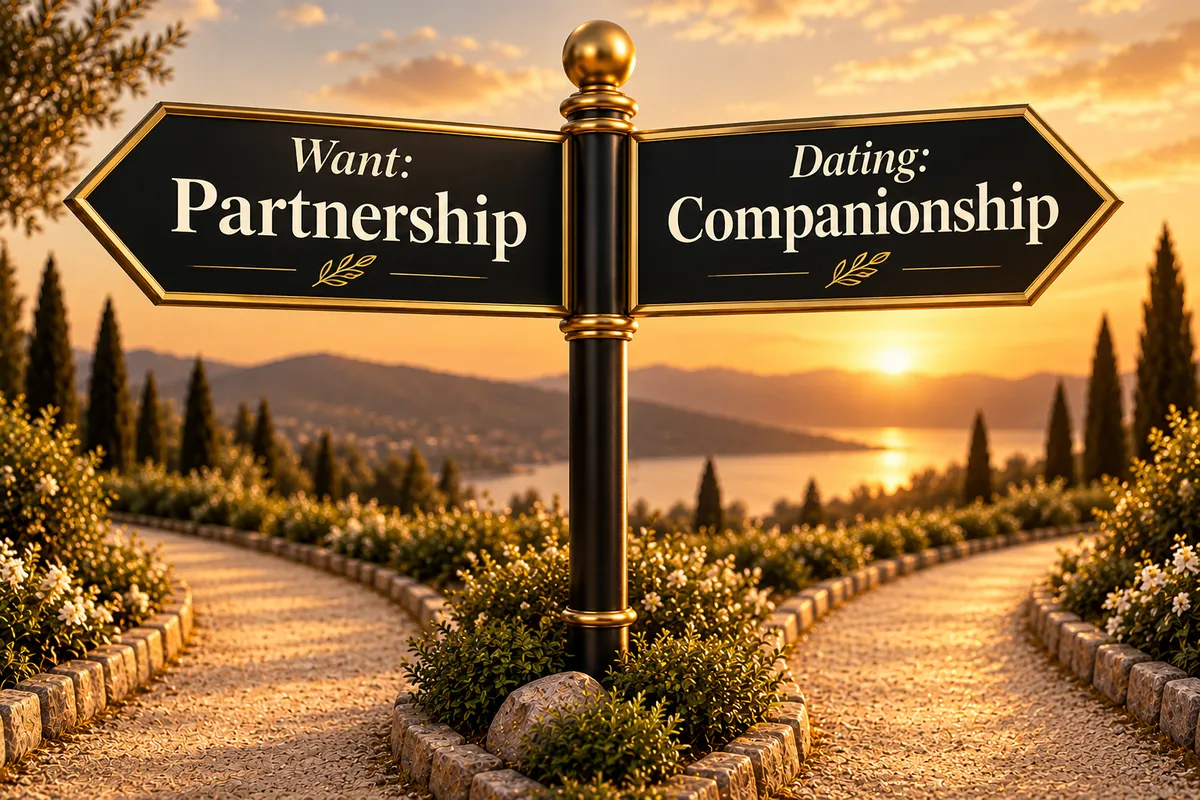
You Want Partnership, But You’re Dating for Companionship
Why wanting a committed relationship isn't enough if the way you're dating isn't helping you evaluate for one.
A lot of people say they want a real, committed relationship.
And they mean it.
They want:
commitment
consistency
emotional connection
someone to build a life with
something that actually lasts
But sometimes the way they're dating doesn't match what they're trying to build.
They want partnership.
But they're dating for companionship.
And that difference matters.
What Does Dating for Companionship Look Like?
It usually isn't obvious.
You meet someone.
You like talking to them.
There's attraction.
You enjoy spending time together.
So you keep going.
You talk more.
See each other more.
Get closer.
And somewhere along the way, you hope all of that connection will turn into the kind of relationship you want.
It may look like:
going with the flow instead of creating direction
building connection before you have clarity
putting a lot of weight on chemistry
talking regularly without discussing what you're actually building
acting like a couple before you've established whether you're compatible for partnership
assuming that because things feel good, they must be moving in the right direction
None of this means you don't want partnership.
It means your goal may have changed, but your dating process hasn't.
That's Where the Confusion Starts
At first, everything can feel like progress.
You're talking.
You're spending time together.
They're texting.
There's attraction.
You're getting closer.
So naturally, you start thinking:
"This is going somewhere."
"We're building something."
"We'll figure the rest out as we go."
But there is an important question that often hasn't been answered yet:
Are we actually compatible for the kind of partnership we both say we want?
Connection doesn't answer that question.
Time together doesn't answer it.
Chemistry doesn't answer it.
You have to actually explore it.
Then Attachment Starts Doing the Talking
This is where things get harder.
By the time important questions finally come up, you may already care about the person.
Now instead of simply evaluating new information, you're also dealing with attachment.
You may start:
explaining away things that concern you
avoiding questions because you don't want to create tension
looking for signs instead of asking directly
hoping something will change
staying longer because you don't want to lose what you've already built
The problem isn't that you cared.
The problem is that investment got ahead of information.
Why So Many People Date This Way
Because this is how most of us learned dating works.
You:
meet someone
see if you're attracted to them
spend time together
see how it feels
get closer
eventually figure out whether it can become serious
And sometimes that absolutely does turn into a relationship.
Sometimes it even turns into marriage.
But here's the question I want you to consider:
Did the process actually help you determine compatibility early, or did you discover the important information after you were already invested?
Those are not the same thing.
"But I've Dated This Way Before and It Worked"
Maybe it did.
That's important to acknowledge.
Plenty of relationships begin without a clear partnership process.
But a relationship forming does not automatically mean the process helped you choose well.
You may have discovered major differences later around:
money
family
faith
lifestyle
commitment
communication
conflict
future plans
And once you've built a life, memories, routines, sex, attachment, or shared responsibilities with someone, those differences become much harder to evaluate clearly.
That's why the question isn't simply:
"Can companionship turn into partnership?"
Of course it can.
The better question is:
"Is the way I'm dating helping me learn what I need to know before I become deeply invested?"
That's a very different question.
Partnership Requires More Than Connection
Companionship matters.
You should enjoy the person you're dating.
You should laugh together.
You should want to spend time together.
You should feel connected.
But partnership asks for something else too.
You are also trying to learn:
Do we want the same kind of relationship?
Do our values work together?
Are our lives heading in compatible directions?
How do we each handle money?
What role does family play in our lives?
How do we communicate when something is uncomfortable?
How do we handle conflict?
What happens when life isn't fun?
Do their actions support what they say they want?
That doesn't mean turning dates into interviews.
It means remembering what you're actually there to learn.
Companionship Dating vs. Partnership Dating
Companionship dating asks:
Do I enjoy being with this person?
Do we have chemistry?
Do we have fun together?
Do we like some of the same things?
Those questions matter.
But they are not enough to evaluate partnership.
Partnership dating also asks:
Are we compatible for the life we're trying to build?
Do our values work together?
Do their behavior and words match?
What am I learning as we move forward?
Is there enough alignment here to keep investing?
You still get to enjoy the relationship.
You just aren't letting enjoyment make all the decisions.
The Pattern That Gets People Stuck
This is where many partnership-minded people get caught:
connection → chemistry → attachment → clarity
They get the information they really needed only after they're already emotionally invested.
Partnership dating changes the order.
It's closer to:
connection → clarity → alignment → deeper investment
You're still allowing feelings to grow.
You're simply letting information grow with them.
What Changes When You Date for Partnership
You begin paying attention earlier.
You ask:
What kind of relationship is this person actually looking for?
Are we both open to exploring whether we're compatible for partnership?
Are their actions matching what they're telling me?
What am I learning about their values?
What am I learning about how they handle real life?
Is this connection actually becoming clearer as we go?
And when new information comes in, you don't automatically keep moving forward because you like them.
You evaluate it.
You ask more questions.
You watch what happens next.
Sometimes you keep going.
Sometimes you don't.
That's the point.
Dating is helping you decide.
The Goal Isn't Less Connection
I don't want you dating like you're conducting a job interview.
That's not the goal.
The goal is to enjoy getting to know someone without confusing connection with compatibility.
You can laugh.
Flirt.
Have fun.
Get excited.
Build companionship.
But if you're looking for partnership, companionship isn't the finish line.
You're also learning whether the two of you actually have what it takes to build a life together.
If This Feels Familiar
Maybe you've been saying:
"I want a committed relationship."
But your actual process has still been:
meet someone → like them → get closer → hope it works
If so, the answer may not be trying harder to find the right person.
You may need a different way to date.
Because when your process starts matching your goal, dating becomes less about hoping something turns into partnership and more about learning whether partnership is actually possible.
Ready to Date Differently?
If you're tired of getting attached before you have clarity, investing in relationships that go nowhere, or trying to figure out compatibility after you're already emotionally involved, this is the work I help my clients do.
You learn how to:
get clear on the partnership you actually want
recognize what matters before you're deeply invested
ask better questions
pay attention to behavior
evaluate compatibility as you go
know when to continue and when not to
Because wanting partnership is the first step.
Learning how to date for it is the next one.


