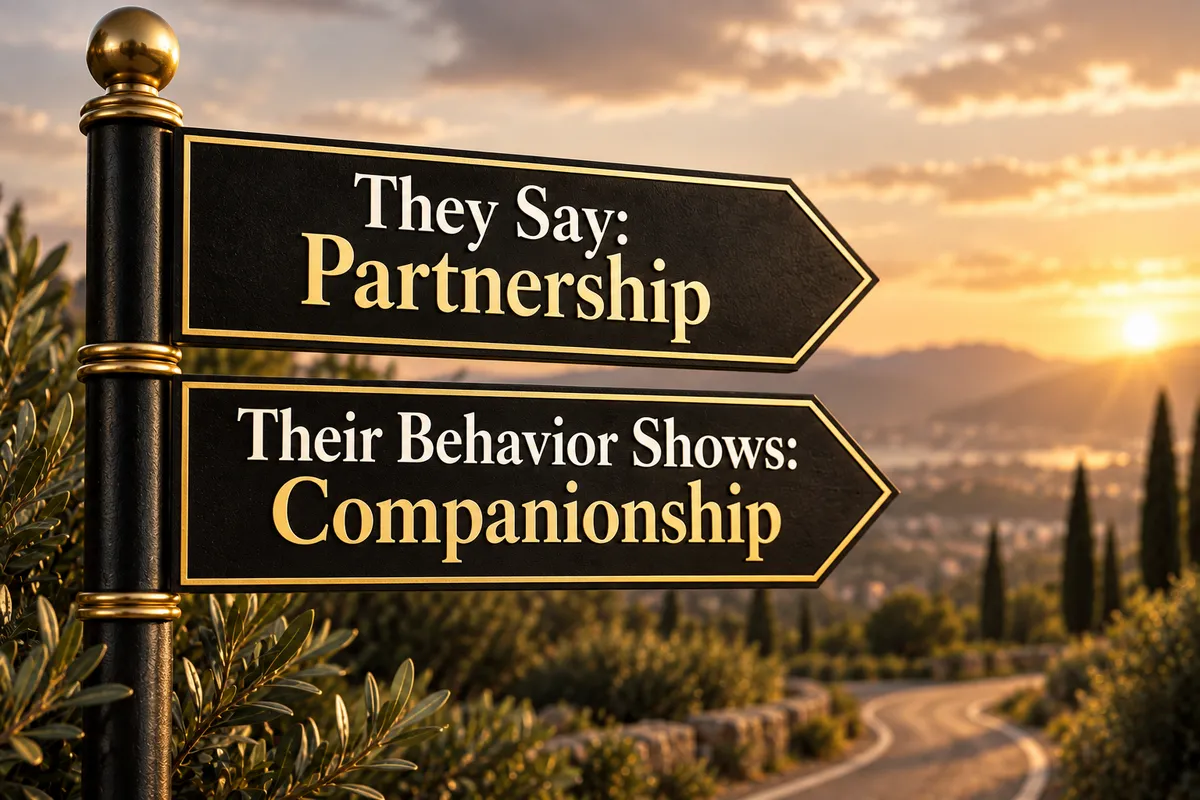
They Say They Want Partnership, But Their Behavior Shows Companionship
You know what’s actually easier?
When someone tells you upfront they’re not looking for partnership.
You may not like the answer, but at least you know what you’re dealing with.
What gets confusing is when someone says they want partnership, but the way they date doesn’t match it.
They say things like:
“I want a serious relationship.”
“I’m looking for my person.”
“I want something long-term.”
Their words sound like partnership.
But as you keep dating them, something feels off.
You may be getting closer.
You may be spending more time together.
You may even feel like you’re becoming a couple.
But you’re not getting much clearer about whether the two of you are actually building toward partnership.
That’s when you have to start looking beyond what someone says they want.
You have to pay attention to what they are actually building with you.
Partnership Language Is Not the Same as Partnership Behavior
Saying you want partnership is easy.
Dating for partnership requires more than saying the right things.
Someone who is actually exploring partnership with you is trying to learn whether the two of you could build a life together.
That means there should be things like:
purposeful conversations
curiosity about the things that matter
growing clarity
consistency between words and actions
willingness to talk about differences
movement toward understanding whether you are actually aligned
Now compare that with someone who says they want partnership but mostly wants to:
spend time together
text throughout the day
enjoy emotional or physical closeness
have fun
receive attention and affection
keep things going without much direction
None of those things are bad.
They are part of companionship.
The question is whether anything else is happening.
Are you actually learning whether partnership makes sense?
This Is Why It Can Be Hard to Recognize
Companionship can feel a lot like partnership.
You may talk every day.
Spend weekends together.
Be physically affectionate.
Meet each other’s friends.
Have routines.
Talk about how much you like each other.
You might even talk about things you could do together in the future.
All of that can make it feel like the relationship is moving forward.
But getting closer and getting clearer are not the same thing.
You can become more connected to someone without learning very much about whether the two of you are actually compatible for partnership.
And the more connected you become, the harder it can be to see that difference.
Pay Attention to What the Relationship Is Actually Doing
Instead of only asking:
“Do they want partnership?”
start asking:
“Are we actually dating in a way that helps us figure out whether partnership makes sense?”
Are you learning about:
values
lifestyle
family
money
faith
communication
conflict
commitment
future plans
how each of you handles responsibility
And just as important:
Are you getting to see how they actually behave in those areas?
Partnership is not built because someone keeps saying they want it.
It develops through what the two of you discuss, observe, learn and decide together.
Watch the Gap Between Words and Behavior
Someone may say:
“I really want something serious.”
But avoid conversations that would create clarity.
They may say:
“I can see a future with you.”
But never explore what that future would actually require.
They may say:
“You’re important to me.”
But repeatedly make choices that don’t reflect that.
They may say:
“I’m just taking things slowly.”
But months later, you still don’t know much more about what the two of you are building.
And sometimes there is a perfectly reasonable explanation for what you are seeing.
Maybe work has been crazy.
Maybe they’ve had a hard week.
Maybe there was a misunderstanding.
The explanation may be completely true.
But now watch what happens next.
Because their words can explain what happened.
What they do afterward helps you see whether that explanation holds up.
You don’t have to assume the worst.
But you also don’t have to let a good explanation make you stop paying attention.
You Don’t Have to Figure Out Whether They’re Lying
Sometimes people knowingly say they want partnership because they know that’s what the other person wants to hear.
That happens.
But sometimes the person genuinely believes they want partnership.
They may want it but not know how to date for it.
They may want the idea of partnership but not have what it takes to build one right now.
Or they may not realize that what they are actually building is companionship.
You may never know exactly which one it is.
And you don’t need to.
You need to pay attention to what they are showing you.
Your job is not to prove their motive.
Your job is to decide whether what they are showing you supports continuing.
Talking About a Future and Building a Future Are Not the Same Thing
Future talk can create a lot of attachment.
Someone says:
“We should go there together next year.”
“You would love my family.”
“I could see us living somewhere like this someday.”
Those conversations can feel like evidence that someone sees you as a potential partner.
Maybe they do.
But talking about a future and building a future are not the same thing.
Ask yourself:
Are you gaining clarity?
Are important conversations happening?
Are you learning whether your lives actually work together?
Are their choices moving the relationship toward partnership?
Future talk means more when present behavior supports it.
What If Everything Feels Great?
This is where it can get tricky.
Sometimes there is no huge red flag.
You enjoy each other.
They’re kind.
Communication is regular.
You feel comfortable together.
Nothing seems obviously wrong.
And yet you may still be building companionship rather than evaluating for partnership.
That’s why partnership dating cannot only be about looking for problems.
You’re not asking:
“Is anything bad enough for me to leave?”
You’re also asking:
“What am I learning that supports continuing toward partnership?”
Those are very different questions.
Look at the Pattern, Not One Moment
Nobody handles every situation perfectly.
Someone can have a stressful week.
Miss a conversation.
Need some time to think.
Handle something badly and then make it right.
One moment does not tell you everything.
That’s why you look at the pattern.
Ask yourself:
What do I keep seeing?
What keeps happening?
What happens after we talk about something important?
Does anything change, or do I keep hearing the same explanation?
You’re not looking for perfection.
You’re trying to understand what is consistently true.
What Partnership Behavior Looks Like
Partnership behavior does not mean someone rushes you into commitment.
It means they participate in the process with you.
They:
are clear about why they are dating
want to learn whether the two of you are aligned
ask purposeful questions
answer yours honestly
are willing to discuss things that matter
follow through on what they say
use what you learn together to decide what happens next
respect your time, energy and investment
create more clarity as the relationship develops
You should not have to pull someone through the process of figuring out whether partnership is possible.
They should be participating in it with you.
When the Words and Behavior Keep Telling Different Stories
At some point, you have to decide what you’re going to trust.
The words:
“I want partnership.”
Or the pattern you keep seeing:
closeness, connection and access without the process partnership requires.
That doesn’t automatically make someone a bad person.
But it may mean you already have the information you need.
And if partnership is your goal, you have to be willing to use what they’re showing you, not just keep listening to what they say they want.
The Question Is Not Whether They Like You
They may like you very much.
That’s what can make this so difficult.
They can enjoy you.
Care about you.
Miss you.
Be attracted to you.
Want you in their life.
And still not be building partnership with you.
So the question cannot only be:
“Do they care about me?”
The better question is:
“Does what they are showing me support the kind of relationship I am trying to build?”
That gives you much more useful information.
If This Feels Familiar
Maybe you’ve been listening closely to what someone says they want while explaining away what their behavior keeps showing you.
Or maybe every conversation gives you just enough reassurance to keep going, but not much actually changes.
Come back to:
What do I know?
What don’t I know yet?
Does what I’m learning support continuing?
You do not have to decide whether someone is lying.
You do not have to figure out why they’re doing it.
You do not have to prove what they really want.
You only need enough clarity to decide whether what they are showing you supports continuing.
Ready to Get Clear About What You’re Seeing?
If someone’s words sound like partnership but their behavior keeps leaving you confused, you don’t have to keep guessing.
On a Clarity Call, we can look at what has actually been happening, separate what you know from what you may be assuming, and identify what you still need to know before deciding what to do next.
Because clarity doesn’t come from figuring out what someone secretly means.
It comes from learning how to use what they are already showing you.
Book a Clarity Call


